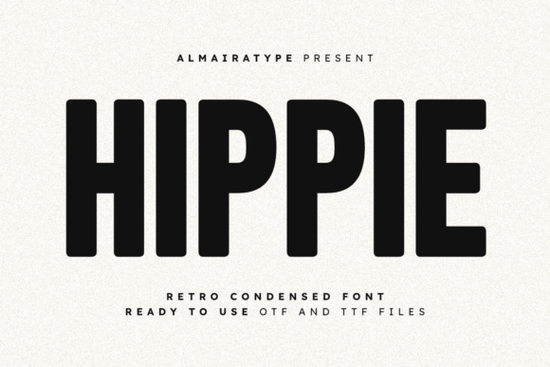
If you need a typeface that balances strong visual presence with everyday readability, the Hippie Font delivers exactly that. Designed as a bold, retro condensed sans serif, it features a tall and sturdy structure that keeps your text compact without feeling cramped. The soft, slightly rounded corners give the shapes a warm, approachable quality while still reading cleanly at smaller sizes. Whether you are building a streetwear line, designing social banners, or setting up a new brand identity, the letterforms provide enough character to stand out while staying professional enough for editorial layouts.
Why does a condensed retro typeface work so well for print-on-demand?
Print-on-demand creators often run into space limitations on t-shirts, mugs, and tote bags. A condensed layout allows you to fit longer phrases or stack words neatly without sacrificing legibility. The vertical stretch draws the eye upward, which is particularly useful for chest prints, back graphics, and badge-style logos. When combined with solid color blocking or simple halftone textures, the tall letterforms create a striking silhouette that photographs well. Shifting from standard width types to a compressed option instantly tightens your composition and reduces awkward white space.
You can also pair it with lighter weights for contrast. If you want something with a softer flow to balance the heavier condensed shapes, consider exploring Mango Dream for secondary headings. That kind of mix keeps your designs from feeling too rigid while maintaining a cohesive vintage-modern mood.
How do you style this typeface without losing clarity?
Retro condensed letters look best when given room to breathe. Because the shapes lean inward and feature gentle curves, tight tracking can cause the counters inside letters like O, D, or B to collapse. Leave a little extra breathing space around your main copy, especially on dark backgrounds or busy illustrations. The style handles uppercase and small caps very well, but switching entirely to uppercase makes long paragraphs harder to scan. Use it for headlines, quotes, or short taglines, then drop down to a neutral body font for supporting text.
Color choice matters just as much as spacing. Earth tones, muted pastels, and high-contrast black-and-white setups all complement the seventies to eighties vibe naturally. If you are experimenting with gradients or layered patterns, let the type remain flat so the background details do not compete with the letterforms. Keeping the typography clean while applying textures to the surrounding layout creates a more polished finish than trying to warp the letters themselves.
Is it reliable for vinyl cutting and machine crafts?
Crafters who use Cricut or Silhouette machines need fonts that cut cleanly and hold their shape on curved surfaces. The steady stroke weight and minimal thin lines make this style highly tolerant of weeding. Thick connectors prevent delicate crossbars from breaking, and the rounded terminals reduce stress points during transfer tape application. When preparing files for vinyl wrapping, hats, or water bottles, always set your cut pressure to match the material thickness rather than relying on default settings. The condensed proportions also help your messages stay centered on smaller substrates where wide typefaces would spill over the edges.
For crafters who sometimes switch between sharp geometric cuts and flowing script layouts, having a backup sans serif with a different rhythm is helpful. Fonts like Godthem Sans Serif offer a slightly broader stance that works well when you need to fill a wider label or banner without stretching the original artwork.
What should you verify before adding this to your project workflow?
- Licensing scope: Confirm whether your license covers digital resale items, physical merchandise runs, or both.
- Character set completeness: Check that accents, punctuation, and alternate glyphs align with the languages you plan to support.
- File formats: Make sure you receive OTF, TTF, or WOFF versions depending on whether you are editing in desktop software or uploading to web platforms.
- Kerning pairs: Open the font in your preferred editor and test tricky combinations like AV, TY, or Wa. Adjust negative space manually if the defaults feel uneven.
When you are ready to source the typeface directly, you can browse the full collection through Hippie Font to compare file variations and preview live text samples. Visiting the dedicated catalog page helps you verify update history and community notes before purchasing.
- Create a master document with your most common canvas sizes pre-set.
- Save your preferred track spacing and leading values as a text style preset.
- Test-cut a single corner on scrap vinyl to verify blade depth before committing to full projects.
- Archive licensed assets in a labeled folder named after the product so you can retrieve them quickly during busy launch weeks.
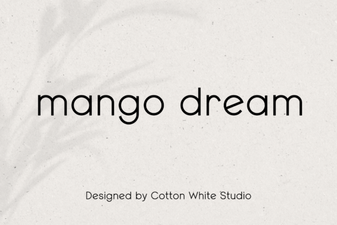 Introducing the Mango Dream Font Design
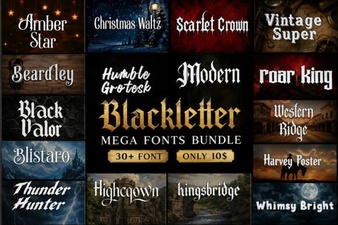 Modern Blackletter Fonts for Creative Design Projects
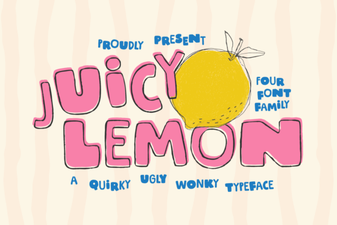 Design & Print Projects Using Juicy Lemon Font
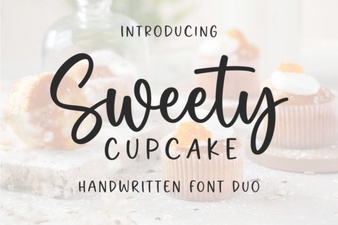 Sweet Cupcake Font for Digital Baking Projects
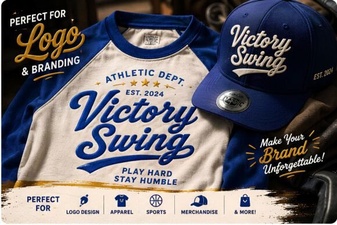 Victory Swing Font: Design Ideas & Creative Uses
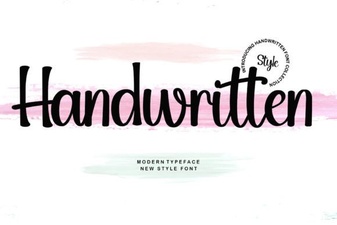 Craft Projects with Creative Handwritten Fonts