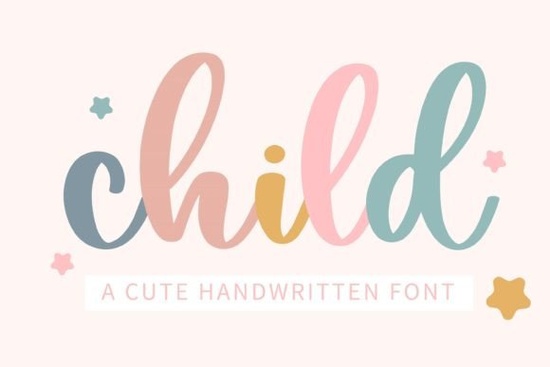
If you need a lettering typeface that feels warm without sacrificing readability, the Child Font delivers exactly that. It reads like a careful marker sketch or gentle pen strokes, making it ideal for project names, gift tags, and everyday branding. You will notice how quickly it adapts to different layouts while keeping a soft, approachable feel. Designers often pick it up when they want something that looks handmade but still prints cleanly on standard paper stocks.
Why does this handwritten style work for paper goods and labels?
Hand lettered designs thrive when the characters maintain consistent spacing and clear stroke contrast. This particular set achieves both by balancing slightly uneven baseline curves with tight kerning. When you place it on packaging, ceremony programs, or thank you cards, the casual rhythm draws attention without overwhelming smaller text. Crafters also appreciate how well it holds up at larger sizes on vinyl cuts, sublimation transfers, and embroidery files. The rounded terminals reduce harsh edges, which helps when designing for children’s parties, nursery themes, or boutique retail items. Many sellers report higher conversion rates on listings because the type feels personal rather than corporate.
How to pair it with other typefaces for balance?
Since this font already carries a strong personality, the best results come from letting neutral sans serifs or clean slab fonts handle body copy. Try setting event dates or ingredient lists in a geometric sans while keeping your main headline in the handwritten style. The key lies in visual hierarchy and proper alignment font script choices that prevent overlapping elements on crowded designs. You might also explore curated script collections to find complementary styles that share similar x-heights and stress angles. Testing dark backgrounds with light text, or vice versa, usually reveals whether the pairing needs more contrast or adjusted tracking.
What file formats and language support are available?
Most modern creative licenses bundle OpenType and TrueType versions alongside preview images. Look for extended character sets that cover Western European accents, numbers, and common punctuation marks. If you regularly prepare files for laser engraving or die-cutting machines, vector outlines or clean PNGs save time during the export phase. Commercial terms typically allow end products like apparel, mugs, and digital templates, but you should always review the specific usage rules before scaling beyond single-use projects. Keeping a backup of the original package protects your workflow when updating older client files.
Can I use it for print-on-demand products?
Print-on-demand workflows rely heavily on crisp raster outputs and scalable vector shapes. Because the strokes remain open and uncluttered, the letters reproduce well on ceramic blanks, tote bags, and wall art without losing their organic charm. When arranging text blocks, adjust line height slightly above default settings to give each character room to breathe. Sellers who focus on seasonal themes often rotate between different handwritten directions, such as exploring pastel-inspired lettering packs or structured script alignments depending on the collection mood. Mockup testing at actual print resolution catches aliasing issues before you submit files to fulfillment partners.
Where can I find similar styles for themed projects?
Building a cohesive design library means grouping typefaces by weight, era, and intended medium. You can easily sort through handwritten font script fonts to match a specific brand voice, or browse external-facing script fonts when working on signage and large-format displays. Adding a few extra variations gives you flexibility across campaign seasons without repeating the same visual tone. If you ever need a quick reference point for classic lettering samples, checking the Brush Script historical archives provides useful context for modern adaptations.
Before finalizing any layout, run through this short production checklist to ensure clean results.
- Verify character coverage includes all required diacritics or special symbols.
- Test scaled outputs at both 72 DPI for screens and 300 DPI for print.
- Check kerning pairs where diagonal strokes cross over vertical lines.
- Export vector paths using outlines before uploading to manufacturing platforms.
- Keep the original license file archived with your client invoice records.
Your next step should be drafting two sample layouts: one for digital sharing and another optimized for physical media. Compare how the letter spacing feels at different sizes, then lock in the version that maintains clarity across both mediums. Adjust leading until the text block reads comfortably, add subtle background textures if needed, and upload your final artwork ready for distribution.
Download Now Sweet Cupcake Font for Digital Baking Projects
 Victory Swing Font: Design Ideas & Creative Uses
 Craft Projects with Creative Handwritten Fonts
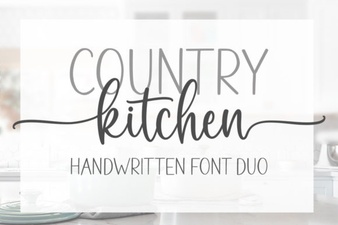 Rustic Charm: Country Kitchen Font Ideas
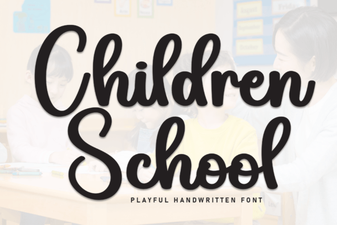 Fonts for Schools: Creative Typefaces for Children's Projects
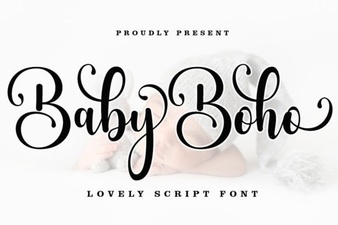 Crafting Soft & Creative Boho Baby Font Designs